There's a particular shelf in almost every kitchen that rarely receives much attention.
It's the one behind the cereal boxes.
Or the cabinet where the coffee mugs have been sitting in roughly the same arrangement for months.
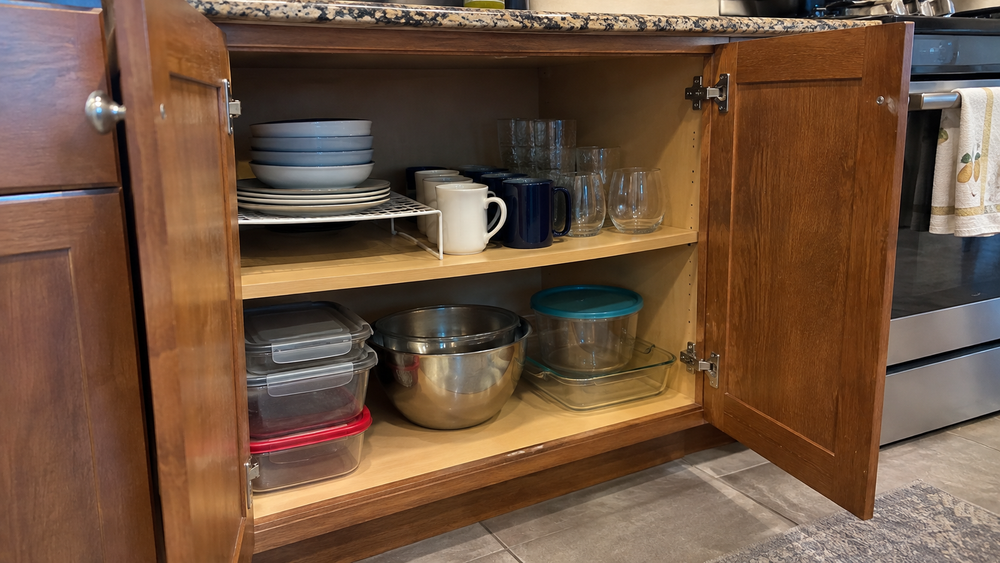
Maybe it's the lower shelf holding mixing bowls, plastic containers, and that one baking dish nobody has used since last Thanksgiving.
Everything looks organized.
The cabinet doors are closed.
The kitchen appears clean.
But one afternoon, someone reaches for an item at the back of the shelf and notices something unexpected.
A few crumbs.
A faint ring left by an old container.
Dust collecting where the shelf meets the cabinet wall.
It's a reminder that a tidy kitchen and a thoroughly cleaned kitchen aren't always the same thing.
For homeowners in Greenville, Greer, Simpsonville, and surrounding Upstate South Carolina communities, cabinet interiors are among the areas worth considering when planning a more detailed cleaning.
Not because they need constant attention.
But because they're easy to forget until something brings them into view.
What Happens Behind a Closed Cabinet Door?
Kitchen cabinets have an interesting relationship with everyday cleaning.
Their doors protect the items inside from some of the activity happening around them.
But they don't make the interior completely immune to dust, crumbs, and ordinary household residue.
Consider the cabinet where your family stores breakfast foods.
Boxes are opened and closed.
Bags are moved.
Someone reaches in while preparing breakfast.
Over time, small crumbs may collect near the edges.
Now think about the cabinet holding coffee mugs.
The mugs are taken out, washed, dried, and returned.
A little moisture may occasionally reach the shelf if an item isn't completely dry.
And in a cabinet near the stove, cooking residue can collect on exterior surfaces and, depending on use and ventilation, sometimes on accessible interior areas.
None of this automatically means the kitchen has been neglected.
It's simply what can happen when a storage space is used repeatedly over time.
The important question is whether the residue is being noticed and addressed appropriately.
The Difference Between Wiping a Door and Cleaning What's Inside
Here's where cleaning expectations can become confusing.
When someone books a regular residential cleaning, they may expect kitchen counters, sinks, floors, and accessible cabinet fronts to receive attention according to the service checklist.
But cleaning the inside of a cabinet is a different task.
It may involve removing items.
Checking the interior surface.
Cleaning accessible corners.
Allowing the material to dry.
And carefully returning belongings to their original arrangement.
That process can take considerably more time than wiping the outside of a cabinet door.
It also requires greater care around personal belongings, food products, fragile dishes, and delicate materials.
At Blessed Maid Cleaning, we offer Regular Cleaning and Deep Cleaning for homes throughout the Greenville area.
Our Deep Cleaning service provides more detailed attention to areas that may not be included in ordinary maintenance, including certain cabinet and closet interiors.
Exact tasks and pricing should always be confirmed before the appointment.
That distinction helps homeowners choose a service based on what actually needs attention.
A Simple Cabinet Inspection
You don't need to empty every cupboard in the kitchen to understand whether detailed cleaning would be useful.
Start with one frequently used cabinet.
Choose a shelf that is easy to reach and contains ordinary household items.
Then take a closer look.
First, inspect the visible edges.
Are there crumbs near the corners?
Is dust collecting along the back?
Do you notice any residue on the shelf surface?
Next, examine the items stored there.
Are containers leaking?
Are food packages properly closed?
Have any items been placed back while still damp?
Finally, consider the cabinet material.
Is the interior finished wood, laminate, painted material, or another surface?
Does it have a removable shelf liner?
Are there signs of swelling, peeling, or other damage?
These details can help determine whether the area needs ordinary dust removal, careful surface cleaning, or attention to a maintenance issue.
There is no need to turn the inspection into an elaborate organizing project.
The purpose is simply to understand the condition of the storage space.
Not Every Cabinet Should Be Cleaned the Same Way
Kitchen cabinets vary more than people sometimes realize.
A home in Greer may have traditional wooden cabinets with a finished interior.
A newer property in Simpsonville might use laminate shelves.
An older kitchen in Greenville could have painted surfaces or materials that require special care.
These differences matter.
Strong cleaners, excessive water, and abrasive tools can damage certain finishes.
Some shelf materials are particularly sensitive to moisture along their edges.
And older finishes may react differently from modern factory-coated surfaces.
Before applying a product, follow the cabinet manufacturer's instructions whenever available.
For ordinary residue, a suitable gentle cleaning method may be sufficient.
Avoid soaking shelves or allowing water to collect around seams and unfinished edges.
The cabinet should be appropriately dry before dishes, food containers, or other belongings are returned.
The goal is not simply to remove visible marks.
It's to maintain the material without creating new problems.
What About the Cabinet Above the Refrigerator?
Some kitchen cabinets are used every day.
Others are opened only a few times each year.
The cabinet above the refrigerator is a familiar example.
It might hold serving trays, seasonal dishes, or items that don't fit anywhere else.
Because the space is high and sometimes awkward to reach, it may receive less frequent attention.
But height creates a different consideration.
Cleaning a difficult-to-reach cabinet isn't worth risking a fall.
Homeowners should avoid standing on countertops, chairs, or unstable furniture to reach elevated storage.
If the area cannot be accessed safely, the work may require appropriate equipment or another arrangement.
The same principle applies to heavy items.
A cabinet containing fragile or valuable belongings may need preparation before cleaning begins.
Professional cleaning should never involve unnecessary risks simply to reach one more shelf.
Clear communication about access and storage conditions helps establish realistic expectations.
When the Problem Isn't Actually Dirt
Sometimes an interior cabinet surface looks discolored even after appropriate cleaning.
That doesn't necessarily mean the cleaning was unsuccessful.
A dark ring may come from a previous spill that damaged the finish.
A swollen shelf can indicate past moisture exposure.
Peeling material may be caused by wear or deterioration.
And recurring dampness may point to a leak or another maintenance concern.
Cleaning can remove ordinary residue.
It cannot repair damaged cabinetry, resolve plumbing leaks, or restore deteriorated surfaces.
If a homeowner notices persistent moisture, visible fungal growth, or signs of pests, the cause should be investigated and addressed appropriately.
Those concerns may require property maintenance or specialized professional help rather than routine house cleaning.
Recognizing the difference helps protect the home and prevents unrealistic expectations.
The Question Worth Asking Before a Deep Cleaning
As November brings more activity to kitchens throughout Upstate South Carolina, some families begin thinking about the condition of the spaces they use most.
But that doesn't mean every cabinet needs to be emptied before the holidays.
In fact, the most useful question is much simpler:
Which areas haven't received detailed attention in a while?
Perhaps it's the lower cabinet containing baking supplies.
Maybe it's the shelves where everyday glasses are stored.
Or perhaps the entire kitchen has been maintained regularly, and the cabinet interiors are already in good condition.
There's no universal answer.
The right approach depends on the property's condition and the homeowner's priorities.
When requesting professional cleaning, it helps to explain which cabinets need attention and whether they contain fragile items or materials requiring special care.
It's also important to confirm whether items must be removed beforehand and what the selected service includes.
These arrangements should be made before the appointment rather than assumed.
Where Blessed Maid Cleaning Fits In
For homeowners in Greenville, Greer, Taylors, Simpsonville, Lyman, and surrounding communities, professional residential cleaning can help manage the regular maintenance of kitchens, bathrooms, bedrooms, and living areas.
Sometimes routine cleaning is enough.
Other times, a property needs more detailed attention to surfaces that aren't part of the usual weekly or biweekly routine.
At Blessed Maid Cleaning, our family-owned business has built its approach around reliable service, careful attention to detail, and respect for the homes entrusted to us.
Led by Regina and her team, we provide regular residential cleaning, detailed cleaning, and services for homeowners preparing to move.
Cabinet interiors are one example of an area worth discussing when arranging a deeper cleaning.
The appropriate scope depends on the property's condition, the selected service, and the tasks agreed upon in advance.
Our goal is to help homeowners make informed decisions about the care their spaces need.
A Kitchen That's Ready for Ordinary Life
After the shelves have been appropriately cleaned, the cereal boxes can go back.
The coffee mugs return to their familiar places.
The mixing bowls are stacked where the family expects to find them.
Nothing about the kitchen needs to look dramatically different.
There isn't a new color scheme.
No expensive storage system has appeared.
And nobody has reorganized the household's belongings into a perfect arrangement for a photograph.
The difference is much quieter.
The shelf beneath those everyday items has received the attention it needed.
The accessible corners have been addressed.
And one of the less visible parts of the kitchen has been properly cared for.
That's often what detailed home cleaning is really about.
Not creating a home that looks untouched.
But paying attention to the surfaces that support everyday routines, even when nobody sees them.
Because sometimes the most meaningful cleaning detail is hiding behind something as ordinary as a cereal box.
And taking care of those details is one more way to make a familiar home feel comfortable, maintained, and ready for whatever the next day brings.