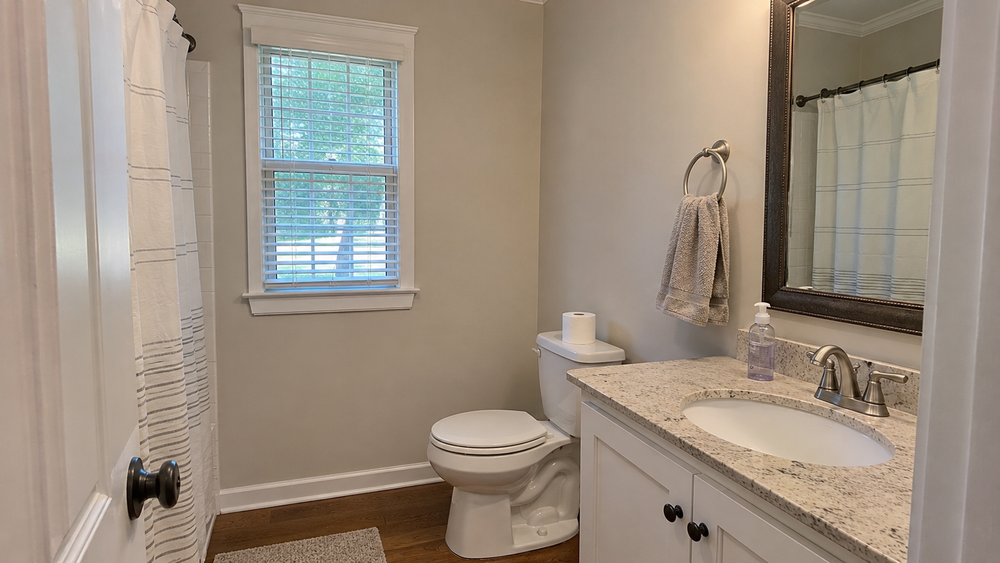
There is a bathroom in the house that almost nobody thinks about.
It might be beside the guest bedroom, at the end of an upstairs hallway, or tucked into a finished basement.
The towels are folded. The shower curtain stays exactly where someone left it. A spare roll of toilet paper has been sitting in the cabinet for months.
No one uses the shower in the morning. No one leaves toothpaste in the sink. No one drops wet towels on the floor.
So the room must still be clean, right?
Not necessarily.
A bathroom that receives very little use can develop a different set of cleaning and maintenance concerns from one that is used every day.
Dust settles undisturbed. Water remaining on fixtures can leave mineral deposits. Seals and drains may develop odors or reveal plumbing issues that nobody notices until guests arrive.
For homeowners in Greer, Greenville, Taylors, and surrounding Upstate South Carolina communities, keeping a guest bathroom ready requires surprisingly little daily effort.
What matters is knowing which details should not be ignored.
Why Does an Unused Bathroom Get Dirty?
A bathroom does not have to be used every day to collect dust.
Air moves through the home as the heating and cooling system operates, doors open, and people walk between rooms.
Small particles eventually settle on countertops, toilet lids, shelves, baseboards, and other horizontal surfaces.
Because an unused bathroom is not visited frequently, that dust may remain in place for weeks.
There may also be residue from its last use.
A few water droplets around the faucet can dry and leave visible marks. Soap residue may remain near a sink or shower shelf. A shower enclosure that was closed before drying completely can retain moisture longer than expected.
These conditions are not necessarily signs of poor housekeeping.
They are reminders that cleaning needs are influenced by the room's environment, not only by how many people use it.
Three Questions to Ask When You Open the Door
Instead of immediately starting a full bathroom cleaning routine, begin with a short inspection.
1. Does the Room Smell Different?
An unpleasant odor can have several causes.
Sometimes the issue is as simple as a damp towel or a closed room that needs ventilation.
In other cases, odor may originate from a drain that has not received water for a long time.
Plumbing fixtures usually include a trap designed to hold water and help prevent sewer gases from entering the room.
When certain fixtures remain unused for an extended period, that water can gradually evaporate.
Running water through the fixture may refill the trap if evaporation is the cause.
However, persistent sewage odors, unusual gurgling, or repeated drainage problems should be evaluated by a qualified plumber.
Cleaning products should not be used to conceal an odor that may indicate a plumbing issue.
2. Are There Any Signs of Moisture?
Look around the sink cabinet, toilet base, shower enclosure, and floor edges.
A rarely used bathroom can have a slow leak that goes unnoticed because nobody enters the room regularly.
Check for visible water, damp cabinet surfaces, discoloration, or damaged materials.
If you find a leak, address the source before attempting to clean affected surfaces.
Persistent dampness or suspected mold may require professional evaluation and remediation rather than routine cleaning.
3. What Has Collected on the Surfaces?
Use natural or overhead lighting to examine the sink, countertop, mirror, toilet, shelves, and floor.
You may notice a light layer of dust or dried water spots even though the room has hardly been used.
This simple inspection helps determine whether the bathroom needs a quick refresh or more detailed attention.
The Sink: Small Changes That Are Easy to Miss
A guest bathroom sink may look nearly untouched.
However, the faucet, drain opening, backsplash, and surrounding countertop can develop visible residue over time.
Begin by removing loose dust from the countertop and any decorative or functional items.
Wipe the sink and faucet with a product appropriate for the materials.
Pay attention to the area where the faucet meets the counter. This narrow edge can retain dust and dried water residue.
If mineral deposits are present, use a cleaning method recommended for the fixture finish.
Avoid assuming that vinegar or acidic cleaners are suitable for every bathroom surface. Some natural stone countertops and specialty finishes can be damaged by acids.
Run the faucet periodically, observe drainage, and check beneath the sink for visible leaks.
A faucet that drips or a drain that repeatedly smells unpleasant may need maintenance rather than additional cleaning.
The Shower That Hasn't Been Turned On in Weeks
An unused shower may have no fresh soap residue or footprints.
Still, it deserves occasional attention.
Start with the shower floor, drain cover, corners, and accessible fixtures.
If the shower was last used several weeks ago, look for leftover water spots or residue on the glass, walls, and faucet hardware.
For a shower with glass doors, clean with a product compatible with the glass treatment and metal hardware.
For tile, check the grout lines and corners. Surface discoloration may have several causes and should not automatically be treated with harsh chemicals.
Use a nonabrasive method suited to the materials.
Occasionally running water through an unused shower helps maintain the water seal in its drain trap.
Afterward, allow the area to dry, using appropriate ventilation.
Do not leave water standing on the shower floor, and avoid keeping the enclosure tightly closed while surfaces are still wet if airflow is needed for drying.
If you notice recurring dampness, loose grout, deteriorated caulk, or signs of water escaping the enclosure, treat these as maintenance issues.
What About the Toilet Nobody Uses?
A guest toilet should not be excluded from a cleaning routine simply because it is rarely flushed.
Dust can settle on the lid, tank, outer bowl, and surrounding floor.
Inside the bowl, standing water may develop a visible ring or mineral residue over time, depending on local water conditions.
Cleaning should include both the interior and the accessible exterior surfaces.
Use a toilet cleaner appropriate for the bowl material and follow its instructions.
For exterior areas, use a compatible cleaner and a separate cloth or tool to avoid transferring contamination to other bathroom surfaces.
Flush the toilet periodically and confirm that it refills and stops running properly.
A continuously running toilet, water leaking around its base, or repeated sewer odors should be addressed as a plumbing concern.
Never mix bleach with toilet bowl cleaners, ammonia, acids, or other cleaning chemicals. Dangerous gases can result.
An unused toilet still needs basic inspection, even when no one has left a visible mess.
The Quiet Problem With Guest Towels
Guest towels often remain folded and undisturbed for long periods.
They may look perfectly clean, but that does not mean they should stay in place indefinitely.
A towel stored in a humid room may gradually absorb moisture from the air.
If it develops a stale or musty odor, laundering it is more useful than spraying fragrance into the room.
Before guests arrive, replace older towels with freshly laundered ones and check that they are completely dry.
The same applies to bath mats and spare washcloths.
If towels consistently develop unpleasant odors while stored in the bathroom, consider moving unused linens to a drier storage location.
A guest bathroom should be prepared with clean textiles, not simply with towels that have remained untouched.
A Simple Maintenance Schedule for a Rarely Used Bathroom
Guest bathrooms generally do not need the same cleaning frequency as bathrooms used by a busy household.
However, an occasional maintenance routine can prevent minor issues from being overlooked.
Every Week or Two
Open the door and check for unusual odors or visible moisture.
Run water briefly in the sink and shower if they have not been used.
Flush the toilet and confirm normal operation.
Look for visible leaks around fixtures and beneath the sink.
Remove noticeable dust or debris from accessible surfaces.
Approximately Once a Month
Clean the sink, faucet, countertop, and mirror.
Clean the toilet bowl and exterior.
Inspect and clean the shower or bathtub as needed.
Wipe shelves, baseboards, and other dust-collecting surfaces.
Vacuum or mop the floor using a method suited to its material.
Check towels, bath mats, and stored bathroom supplies.
Before Guests Arrive
Give all frequently touched surfaces a fresh wipe.
Check the toilet and sink for proper operation.
Replace towels with clean, dry ones.
Make sure hand soap and toilet paper are available.
Empty the wastebasket.
Inspect the mirror, faucet, and shower for spots.
Ensure the room smells normal without relying on heavy fragrance.
These intervals are general suggestions. A bathroom with humidity, leaks, or other ongoing concerns may require more frequent attention.
Why the Bathroom's Location Can Matter
A guest bathroom on the main floor may receive regular airflow and occasional use, even when no visitors are staying overnight.
An upstairs bathroom behind a closed door may be visited less frequently.
A finished basement bathroom may have different temperature, humidity, or ventilation conditions from the rest of the home.
In Upstate South Carolina, seasonal humidity and changing heating and cooling patterns can influence how quickly damp surfaces dry.
However, a bathroom's actual condition depends on factors such as ventilation, plumbing, insulation, and the behavior of the household.
Rather than following one rule for every bathroom, observe the specific room.
If surfaces stay damp, ventilation may need attention. If dust returns quickly, review the surrounding airflow and routine maintenance. If odors continue despite normal use of fixtures, investigate the source.
A clean-looking room should not prevent homeowners from noticing signs that something else requires attention.
When Is a Deep Cleaning Necessary?
A guest bathroom that receives regular maintenance may need only a brief refresh before visitors arrive.
More detailed cleaning may be useful when the room has been neglected for an extended period or has visible buildup around fixtures, grout, baseboards, and other surfaces.
For instance, a bathroom that has remained closed for several months may need a more thorough inspection and cleaning before it is ready for use.
Blessed Maid Cleaning offers both Regular Cleaning and Deep Cleaning services in Greer and surrounding Upstate South Carolina communities.
Its published cleaning information includes bathrooms among the rooms addressed during residential cleaning.
Homeowners can discuss the condition of an infrequently used bathroom when requesting service and confirm which details are included.
Cleaning professionals can help with routine soil and residue. Plumbing leaks, damaged materials, and significant moisture problems should be handled by the appropriate specialists.
Ready Even When No One Is Expected
The guest bathroom may go another month without being used.
Nobody may notice the freshly wiped faucet, the dust-free shelf, or the clean floor around the toilet.
And that is perfectly fine.
Unlike a heavily used family bathroom, a guest bathroom does not usually need constant attention.
It needs occasional inspection, appropriate cleaning, and a little preparation before someone needs it.
When a friend or family member eventually opens the door, the sink works, the towels are fresh, and the room is comfortable to use.
The bathroom nobody uses does not have to be forgotten.