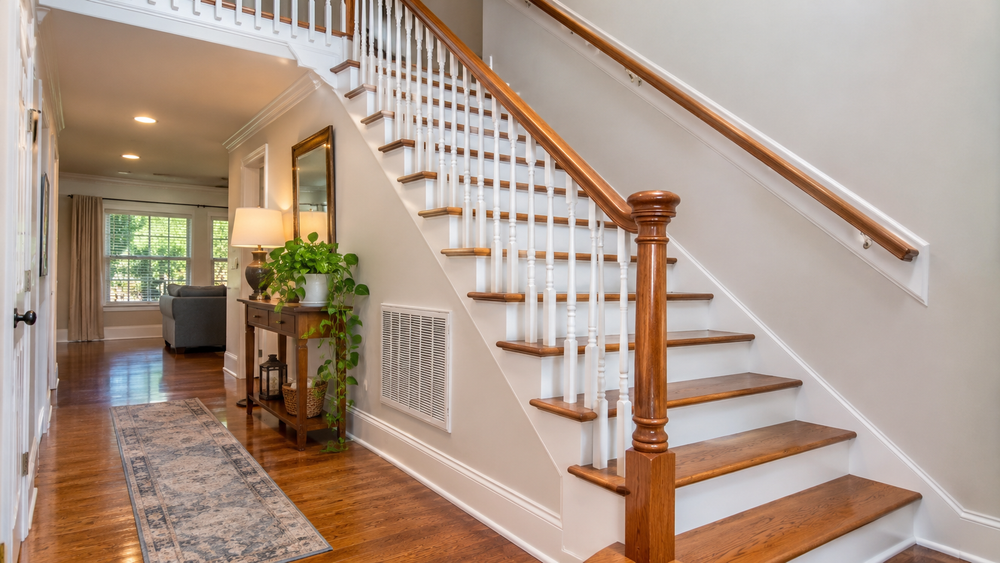
A staircase is one of the few places in a house where nearly every surface is touched, stepped on, or passed at close range.
Shoes make contact with the treads. Hands slide along the railing. Dust gathers beside the balusters. Small particles settle where the steps meet the wall, and the corners become difficult to reach with an ordinary vacuum cleaner.
Yet staircases are often cleaned as though they were simply another section of flooring.
In homes around Greer, Greenville, and Simpsonville, stairs connect bedrooms, living spaces, entryways, and sometimes finished basements. They handle repeated movement throughout the day, but their cleaning needs are quite different from those of a hallway or an open room.
Understanding those differences helps homeowners maintain a staircase that looks better, feels safer underfoot, and receives the attention its construction requires.
A Staircase Is More Than a Series of Steps
Look closely at an ordinary residential staircase. Several individual surfaces contribute to its appearance.
The tread is the horizontal surface where each foot lands. The riser is the vertical section between two treads. The nosing is the front edge of the tread, which may project slightly beyond the riser.
Along the sides, there may be baseboards, painted trim, or a staircase skirt board. Depending on the design, the staircase might also have handrails, posts, and balusters.
Each component collects a different kind of residue.
Treads receive the greatest amount of direct foot traffic. Risers can develop scuff marks from shoes. Nosing edges may trap dust in small grooves or along carpet seams. Baseboards collect settled particles, especially where they meet the steps.
A quick pass with a vacuum or mop may improve the overall appearance without addressing many of these areas.
That is why detailed staircase cleaning begins with recognizing the staircase as a collection of surfaces rather than treating it as one continuous floor.
The Places Where Dirt Collects Quietly
The Back Corners of Each Step
The narrow area where a tread meets a riser can hold fine dust, hair, and small debris.
On carpeted stairs, particles often become lodged near the edges where the carpet meets the wall. A standard vacuum floor head may not reach these areas effectively.
A crevice attachment or small vacuum nozzle can provide more controlled access.
On hardwood or painted stairs, a microfiber cloth or soft brush may be better suited to the corners, followed by careful removal of loosened debris.
The objective is to remove buildup without forcing dirt into the gaps between materials.
The Front Edge of the Tread
The nosing receives repeated contact from shoes and can develop a slightly different appearance from the rest of the step.
On carpeted stairs, this area may show visible wear before the center of the tread.
On painted or finished wood, dirt can accumulate around decorative edges, grooves, or joints.
Cleaning can remove surface residue, but it cannot reverse worn carpet fibers, missing finish, or damaged paint. Recognizing that distinction prevents unnecessary scrubbing.
The Trim Following the Stairs
Staircase trim is easy to overlook because it often blends into the wall.
White-painted skirt boards may reveal dark scuff marks, while natural wood trim can accumulate a thin layer of dust along its upper edges.
The lower sections near the first few steps sometimes receive additional contact from shoes, vacuum attachments, and household items carried upstairs.
A soft cloth and a cleaning product appropriate for the painted or finished surface are usually preferable to abrasive scrubbing.
Why the Handrail Deserves Its Own Cleaning Routine
A staircase handrail is not simply decorative.
It is a regularly touched surface, particularly in households with children, older adults, or anyone who uses the railing for stability.
A handrail can look clean while carrying skin oils, fingerprints, and residue from ordinary daily contact.
Its shape also complicates cleaning.
Round wooden handrails have undersides that are not always visible. Square or rectangular designs may have recessed edges. Decorative posts and balusters create narrow spaces where dust settles.
For routine maintenance, a slightly damp microfiber cloth can remove common surface residue from many sealed finishes. Follow the manufacturer's care instructions, avoid excessive moisture, and dry the surface as needed.
When using a disinfectant, verify that it is suitable for the material and follow its label, including any required contact time.
Cleaning and disinfecting are different processes, and not every railing needs a disinfectant during every visit.
The goal is a clean, comfortable hand-contact surface without damaging the finish or leaving a slippery residue.
Different Staircase Materials Require Different Methods
One cleaning routine does not work equally well for every staircase.
Carpeted Stairs
Carpeted stairs tend to capture dust, lint, hair, and small particles inside their fibers.
The challenge is that stair carpeting has several difficult-to-reach areas: the tread surface, the vertical riser, the corners, and the front edge.
A vacuum with a suitable stair attachment can make a noticeable difference.
Work slowly enough to collect particles rather than moving the attachment quickly across the surface.
Pay particular attention to areas beside the wall and around the nosing.
If stains remain, identify the carpet material and follow its recommended spot-cleaning instructions. Avoid soaking the fibers or using excessive cleaning solution.
Hardwood Stairs
Finished hardwood stairs benefit from gentle cleaning that removes grit before it can scratch the surface.
A vacuum with a soft-floor attachment or a dry microfiber tool can collect loose particles.
For additional cleaning, use a wood-floor product compatible with the finish and apply only the amount of moisture recommended by the manufacturer.
Excess water can enter joints or affect the finish over time.
Never leave a wooden staircase wet, especially when it is used frequently.
Painted Stairs
Painted stairs can show shoe marks, dust, and surface wear.
Because different paints have different durability, aggressive scrubbing may remove color or alter the sheen.
Begin with a soft cloth and a mild, compatible cleaner. Test an inconspicuous section before treating visible marks.
Some marks are signs of damaged paint rather than removable dirt and may require maintenance instead of additional cleaning.
Tile or Stone Stairs
Tile and stone surfaces have their own cleaning requirements, especially when grout lines or textured finishes are involved.
A product suitable for ceramic tile may not be appropriate for natural stone.
Acidic cleaners, for example, can damage certain stones and finishes.
Use material-specific care instructions, remove loose particles before wet cleaning, and pay attention to grout lines without saturating the staircase.
Whatever the material, allow every step to dry completely before normal use.
The Order of Cleaning Makes a Difference
Staircase cleaning is more effective when the sequence prevents dust from falling onto areas that have already been cleaned.
A practical approach starts with accessible upper surfaces, including the railing, posts, and trim.
After removing that dust, clean the steps from the upper section downward, working carefully and maintaining secure footing.
Vacuum or collect loose debris before using any damp cleaning method.
The finishing stage should address remaining marks, visible edges, and the landing at the bottom.
However, cleaning order should never compromise safety. Avoid standing on wet steps, blocking the only safe route, stretching beyond comfortable reach, or placing equipment where someone might trip.
If another household member needs to use the staircase during cleaning, it may be better to complete the work in smaller sections.
A staircase should never become hazardous simply because it is being cleaned.
The First and Last Steps Often Tell a Different Story
Not all steps receive the same amount of traffic.
The first few steps near a downstairs entry or living area may collect additional dirt from shoes, pets, and daily movement.
The final steps leading to an upstairs landing may collect lint and dust from bedroom carpets or nearby fabrics.
Staircases connected to garages, basements, or exterior entrances may require a different maintenance rhythm than stairs used mainly between bedrooms.
This is particularly relevant in Upstate South Carolina, where rainy days, seasonal pollen, and outdoor activities can introduce additional particles into the home.
Instead of assuming every step needs identical attention, homeowners can inspect the areas where traffic and residue are most noticeable.
How Often Should a Staircase Be Cleaned?
The answer depends on the material, household size, and frequency of use.
In a busy home, visible debris on steps may need to be removed several times a week. Carpeted stairs may benefit from regular vacuuming, particularly in households with pets.
Handrails can be wiped more frequently when they receive constant contact.
Baseboards, balusters, trim details, and narrow crevices may need less frequent but more deliberate attention.
A useful routine separates maintenance into two categories:
Frequent cleaning: Remove loose debris, inspect high-traffic steps, and wipe visibly marked hand-contact surfaces.
Periodic detailed cleaning: Reach corners, trim, railing supports, risers, and other areas that an ordinary pass does not fully address.
This approach helps maintain the staircase without treating every routine cleaning as a major project.
When Professional Cleaning Can Help
Some staircase designs require additional time and attention because of their shape, size, or materials.
A staircase with multiple landings, intricate balusters, carpeted edges, and painted trim presents a different task from a short flight of sealed wooden steps.
Blessed Maid Cleaning offers Regular Cleaning and Deep Cleaning services for homes in Greer and surrounding Upstate South Carolina communities.
Its published service information includes floor care and attention to baseboards. Homeowners with specific staircase concerns can discuss individual surfaces and expectations when requesting a cleaning quote.
That conversation is especially useful when a staircase has delicate finishes, extensive trim, or areas requiring more detailed care.
A Better View of an Everyday Space
A staircase rarely receives the same attention as a kitchen countertop or bathroom sink.
It is usually treated as a passage between more important rooms.
But its small surfaces, frequent contact points, and challenging corners make it one of the most detailed cleaning areas in a home.
The next time you walk upstairs, look beyond the center of the steps.
Notice the handrail's underside, the trim beside the wall, the back corners, and the edges where different materials meet.
Those details explain why a staircase deserves a cleaning routine of its own.